Featured

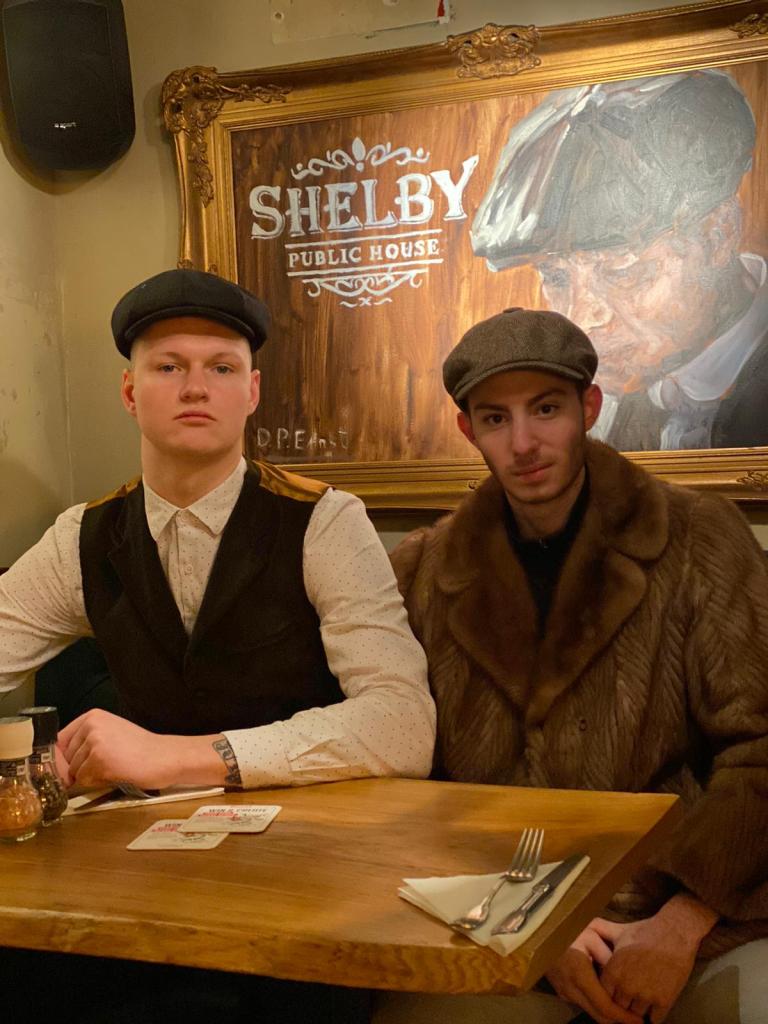
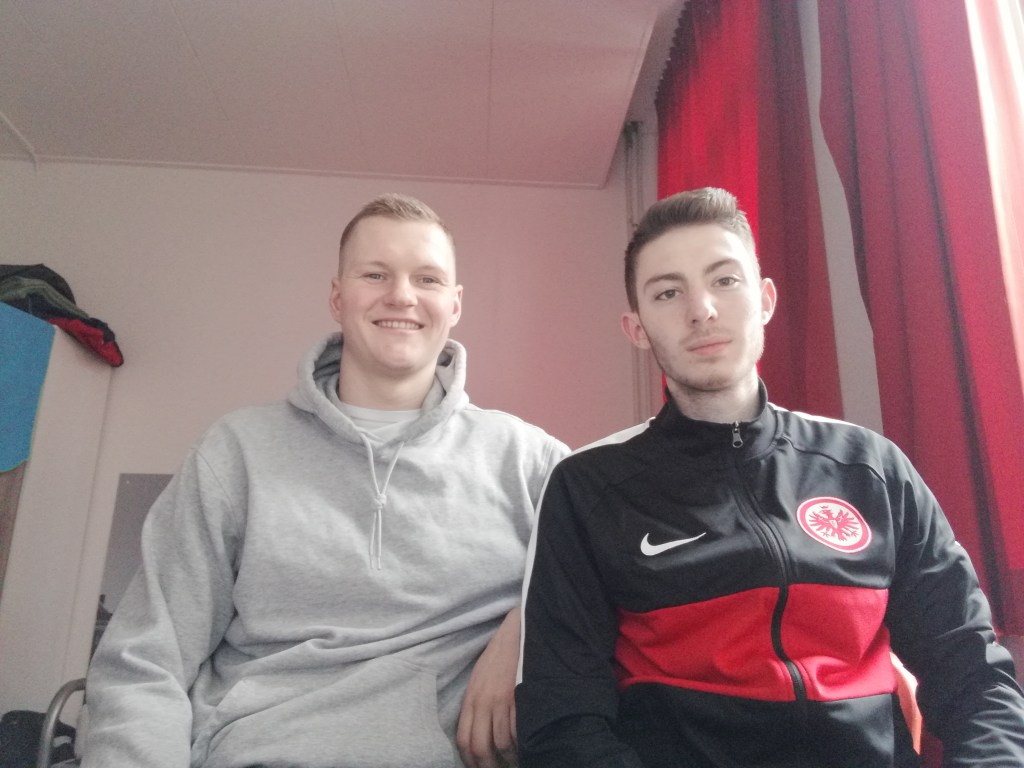
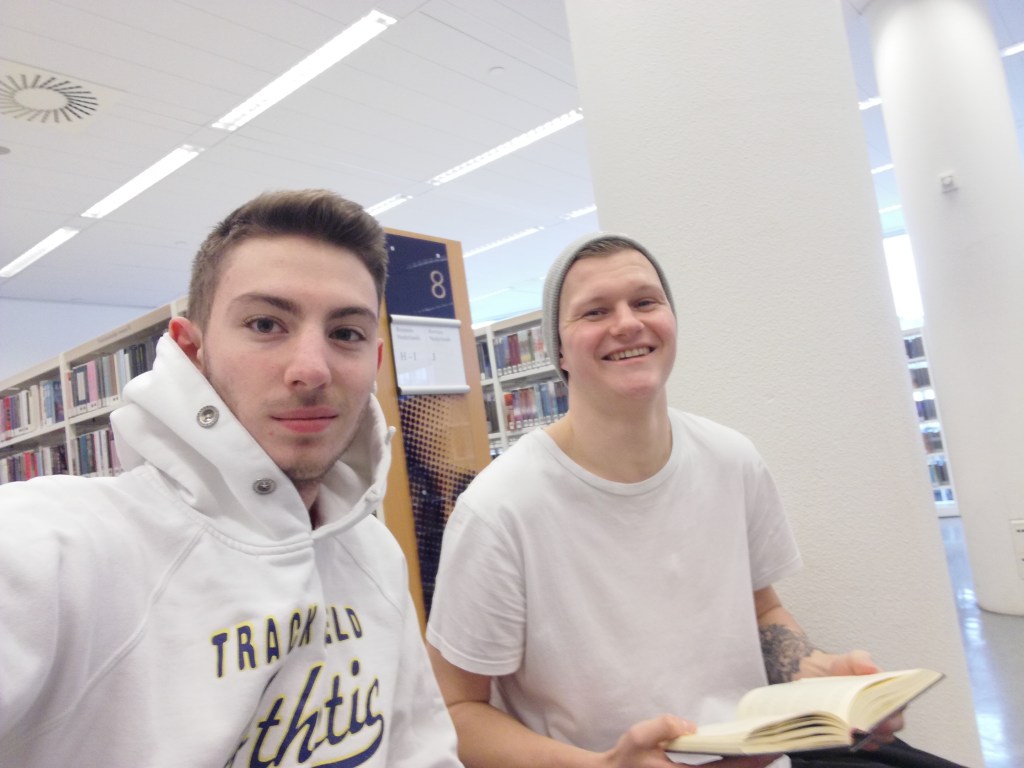
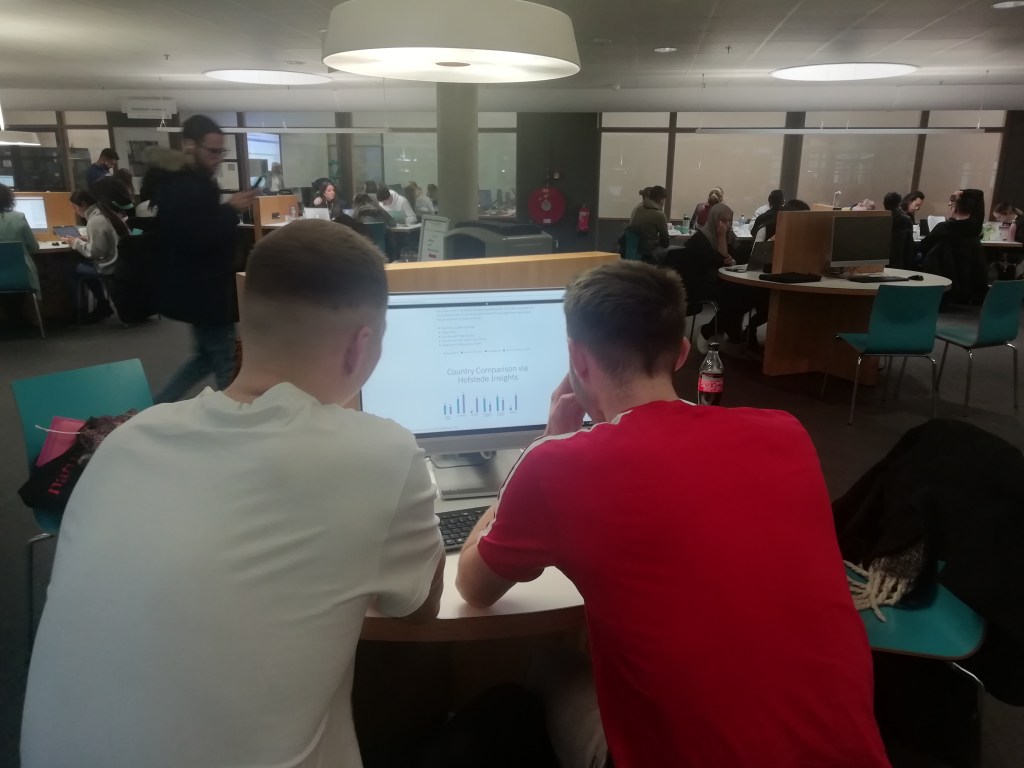
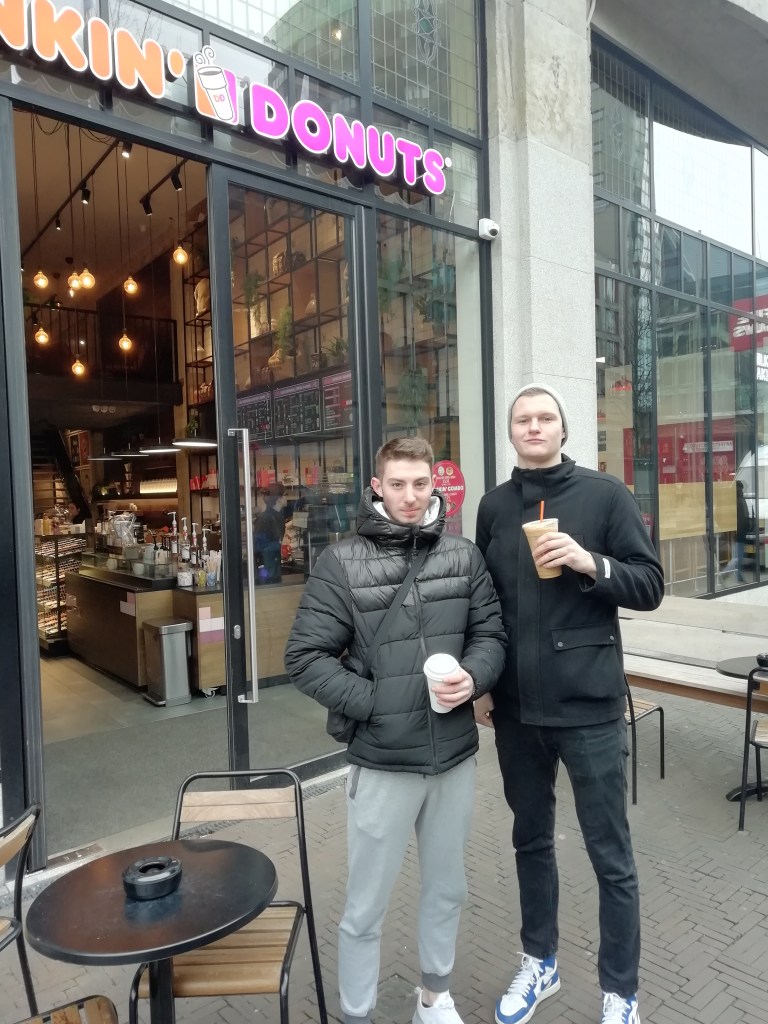
Get to know the guys.

Andrew is a 19 year old student who grew up in Germany with an Italian mother and a Scottish father. He now lives in the Hague studying ISPM at the university of applied sciences. He is keen to learn about new cultures and is starting with Latvia learning about it from Girts.

Girts is a 24 year old student from Riga, Latvia. Born and raised in Latvia but since age of 19 have lived all over the world. He is an former professional basketball player who has lived in multiple countries such as United States of America, Italy, Ireland, Latvia and now the Netherlands. Girts is interested to learn about Scottish culture and especially their whiskey.

Pawel is a 20 year old student who was raised in Poland and grew up all over the world. Pawel is a third culture kid although both his parents are from Poland. He is eager to learn about new cultures and can’t wait to find out more about Latvian and Scottish culture.

Conclusions

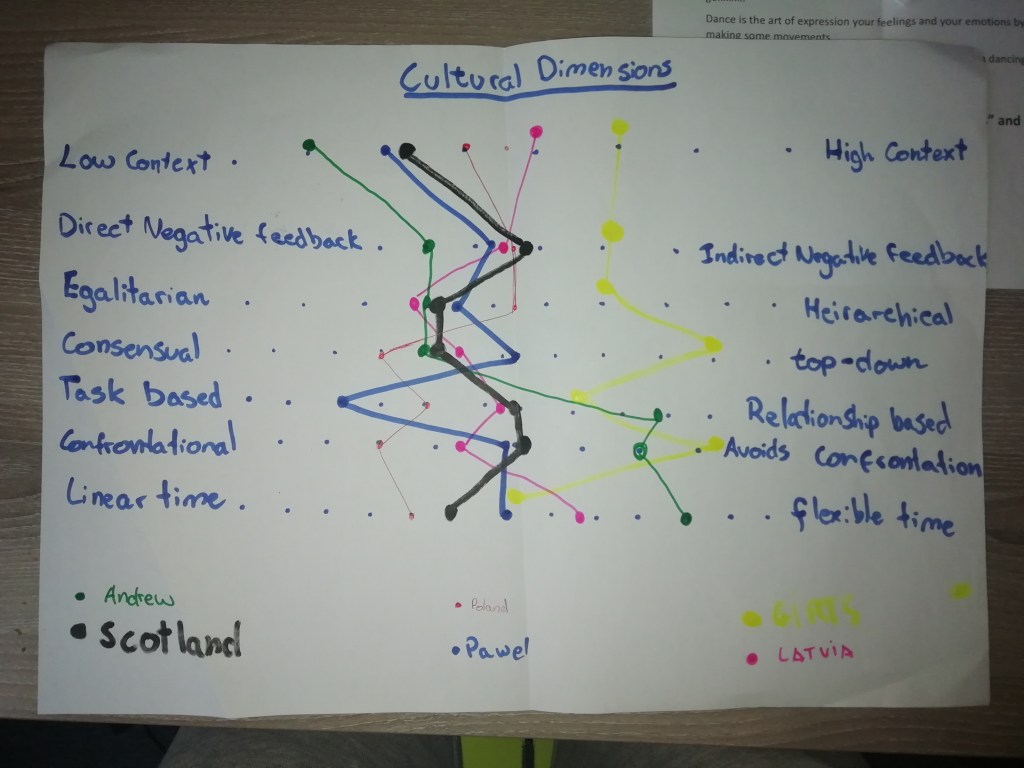
To conclude our blog we have plotted all cultural dimensions if both us and our countries on a graph. We were curious to see how our dimensions compared to those of our countries and, having spoken a lot about the individual countries, we wanted a visual representation of the differences and similarities in our cultures.

The above shown picture shows this graph and each colour corresponds to an individual person or country, visible on the key at the bottom of the image, the yellow colour represents Girts as this may not be clearly visible on the picture.

What we noticed is that we all have certain attributes that we share with our county but there is for each of us a point where we diverge from our country. For Andrew this was the fact that he is very relationship based whereas in Scotland it is far more common to be in the middle between task oriented and relationship based. For Girts it is the fact that he prefers top down decision making whilst Latvians generally prefer consensual decision making. Pawel did not diverge as far from his country but for him the biggest difference was confrontation avoidance. In Poland people are rather confrontational but Pawel tends to fall centrally, half way between confrontational and avoids confrontation.

To conclude this project we have undertaken has helped each of us understand the cultures of the others better and gain a deeper understanding of them as people as well. It is very important however to remember that national culture is not the only thing that defines a person and therefore there is a lot more that forms the individual cultures of each of us like our experiences, where we grew up and the individual cultures of our family and friends.

Leadership and decision making

The environment in which people work is highly dependent on where they are and how leadership and decision making is viewed in that culture, may it be the culture of the country or of the business. We spoke about this and decided it comes down to three variables that, in general, decide the way a working environment is structured. The first factor that is whether one works in a Top-down environment, which means there is a clear structure in the process of making a decision and instructions come from the person above you in the hierarchy of the company. Scotland and Latvia falls centrally between these two with a propensity for consensual decision making. The second factor is very similar to the first and it is if the company is hierarchical meaning there must be a clear structure with a boss and everyone clearly knows where they are in the hierarchy. On the scale between egalitarian and hierarchical Scotland and Latvia falls centrally with a tendency towards egalitarian, because every person receives same treatment at first and have to show there worth to the community. The third factor is how employees are as people, if they are relationship based people of rather work oriented, which has a rather large impact as it determines the interactions between colleagues as well as those between different levels of the hierarchy. As with the other two factors Scotland and Latvia as well falls centrally but on the side of work orientated.

feedback

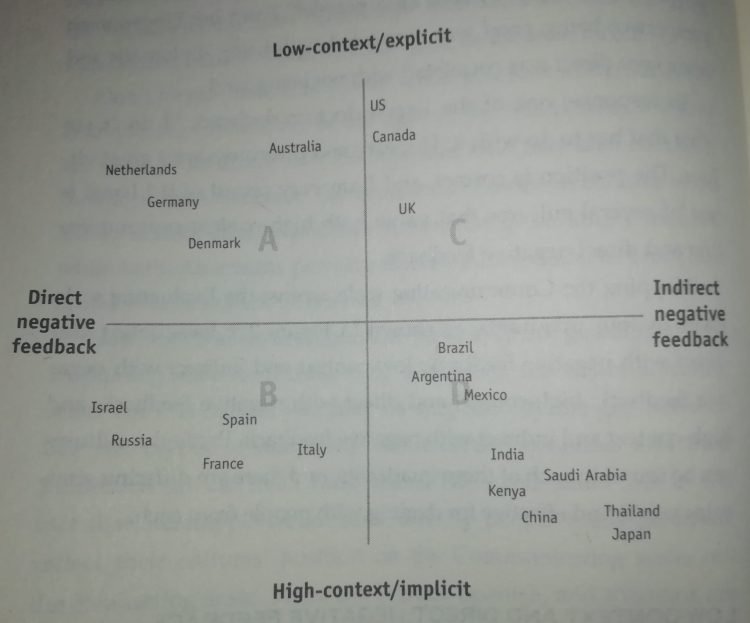
Even though Latvia, Scotland and Poland end up on the same end of the scale for the High and low context ideas of Hofstede we discussed how they are rather different when it comes to feedback and how they prefer to receive negative feedback. In Latvia it is very important not to openly criticize colleagues in a public place and doing this could damage the personal relationship between colleagues. When in private however Latvians prefer to receive direct feedback placing the country in the Low context/ direct negative feedback square. Scotland on the other hand is somewhat different and ends up being placed in the low context/ indirect feedback (as seen in the image UK in block C). Even though Scottish like to be direct they prefer their feedback to be a little more indirect as they tend to feel attacked if criticized too openly. The feedback should be constructive and private at the same time while trying to implement compliments as well as positive feedback to wash down the negative. Poland on the other hand is a lot like Latvia when it comes to the ways feedback is received. Poland is little higher context the both other cultures, when it comes to how Polish like to receive their feedback Polish people prefer to receive negative feedback in private. Sharing negative information about others in a setting such as a staff meeting may be seen as an attack and could potentially damage the relationship between cliques or the boss. However when the conversation is private it is important for Polish to be very direct as it is believed that direct and straight forward feedback assures that there will be less confusion and allows for quicker resolution to the problem

Language

Language is a key component.

Basic background of Latvian language.

Latvian language is the official language of Latvia with around 1.3 million native speakers and 100 thousand abroad. Although Latvia has around 2 million inhabitants only 62% percent used it as their primary language at home. Latvian has some dialects, but you can barely hear them at this day and age because of the generation change.

Key words and phrases.

Hello, is pronounced “Sveiki” to great people. What is your name is “Ka tevi sauc ?”. Yes – Ja. No – Ne. Sorry – Piedodiet !

Polish is a Slavic language. To foreigners’ Polish sounds very aggressive often people assume that when people speak Polish loudly is because they are angry, or they are fighting with someone. Polish language is very complex there are many sounds that are similar which is the reason for people speaking loudly. The louder one speaks the more distinguished the sounds are which makes the message clearer. Key phrases that are important in Poland would be:

  • Dzień dobry, (good morning)
  • Część (hello)
  • Jak się masz? (how are you)
  • Jak masz na imię? (what’s your name)
  • Skąd jesteś? (where are you from)

Contrary to popular belief the language spoken in Scotland is English, even if it does not seem that way most of the time. Scottish English, as it is known, is a collection of dialects of the English language descending form previous scot languages. It is not uncommon for words or phrase to be take form Gaelic, an older Scottish language, which is now a native language rather than an official one. 

We discussed how words were pronounced differently in and some differences in expression for example when asked if you want a cup of tea Scots reply by saying:

               “No, you’re alright.” instead of “No, I’m alright.”

Some other words that differ are these:

               “Lassie” à  young girl

               “Laddie” à young boy

               “Wee” à little
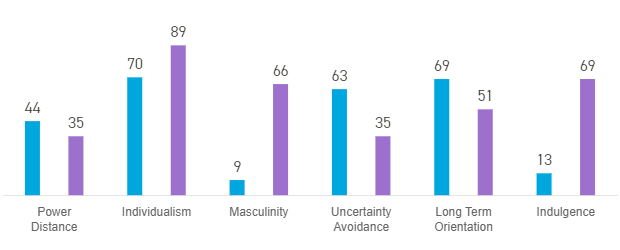
Country Comparison via Hofstede Insights

download

Using Hofstede insights we discussed our countries and our cultural differences. The results were not that surprising for the guys to be honest. Both Andrew, Girts and Pawel knew that all nationalities are individualists by them self. The masculinity gap were a little surprising but we came to conclusion not every nation can be like Braveheart. The gap in “Uncertainty in Avoidance” was really interesting, guys realized that people living in Scotland are way more calm when they wake up every day because they know what to expect from the upcoming day.  High score of 69 indicates that the British (Scottish as well ) culture is one that is classified as Indulgent. People show willingness to realize their impulses and desires with regard to enjoying life and having fun.

With regards to Hofstede’s ideas of high and low context cultures we discussed what category Scotland, Latvia and Poland would fall under. We concluded that all countries have low context cultures, even though Scotland and Poland are closer to the middle of the scale. In Latvia it is not necessary to give a lot of background information and it could lead to irritation if you try to give too much of an explanation. In Scotland people tend to communicate in a direct manner and even though they enjoy chatting about nothing in particular we concluded they fall on the side of low context. The same can be seen in Polish culture although it depends on the setting, for example if the meeting is informal Polish will tend to tell a whole story around the topic and then get to the point. However we also found out that when is comes to communication in a more formal or professional setting Polish tend to be more low context.

Scotland ? Latvia ? Poland ?

Scotland

Scotland is a country very well known for its beautiful landscapes and of course for its Whisky. Scotland is the most northern of the United kingdom with a population of 5.4 million and there has always been a rivalry with their English neighbors in the south with wars dating back to the formation of Scotland, illustrated in the very famous film Braveheart which tells the story of William Wallace leading the Scot rebellion against the English. This portion of history is rather important as Scotland is still not independent despite almost 1000 years of on and off war. The Scots are also known for their interesting food, clothes, music, dancing and excessive swearing. It is also the home of the Loch ness monster, nicknamed Nessie by the Inverses locals. Many inventors like sir Alexander Fleming, the man who discovered penicillin; Alexander Graham Bell, the inventor of the telephone; and many other inventions like the television, Bicycles, and the steam engine.

Latvia

Riga is the capital of Latvia. Country of Latvia just turned 101 years old. Latvia is a former soviet union country and has been independent since 1991. Latvia has ethnic and linguistic ties to Lithuania, but not Estonia. Estonia is actually has more in common with Nordic countries than Baltic ones. 44% of Latvia territory is forested. Latvia ranked the 2nd tallest nation in the world. Latvias internet speeds are among the fastest in the world –13.8MB/s. Latvia produces more female models per capita that almost any country in the world. Latvians love their beer.

Poland

Poland is a country situated on the eastern side of Europe. It is the only Slavic country that doesn’t use hearlic letters in their alphabet. Poland has joined European Union in 2004 which allowed for a lot of development in the country. Poland is well known for their history as the location of the country is not very convenient because it is situated between two were powerful countries which are Russia and Germany which as history tell used to like displaying a show of power. Poland is well known for potato Vodka beautiful landscape and football. Although Poland doesn’t generate a lot of athletes that stand out there are a few which are world wide known. Poland is famous for football and volleyball. Poland has been the volley all world champions many times one might say that they are way more successful than the football representation of the country however they are not as famous in the worlds community.

Design a site like this with WordPress.com
Get started